
Japan Shrine Etiquette: Complete Guide for Tourists Visiting Japanese Shrines (2026)

Visiting a Japanese shrine can be intimidating for first-time visitors. What's the right way to bow? How do I wash my hands? This complete guide covers all the etiquette you need to know for a respectful and meaningful shrine experience.
Quick Etiquette Checklist
Once you master these basics, check out our guide on Top Things to Do at a Japanese Shrine to make the most of your visit.
- Bow slightly when passing through the torii gate
- Walk on the sides of the approach path (center is for gods)
- Purify your hands and mouth at the temizu basin
- Make a small offering (¥5 coins are lucky)
- Bow twice, clap twice, bow once (nihai-nihakushu-ichihai)
- Pray silently for a few moments
- Back away from the altar before turning
Step 1: Entering Through the Torii Gate
The iconic red or wooden torii gate marks the transition from the everyday world to sacred ground.
✅ Do This:
- • Bow slightly (about 15 degrees) before entering
- • Walk to the side of the path, not the center
- • Remove hats before entering the main hall area
❌ Avoid This:
- • Walking directly down the center (reserved for kami/gods)
- • Loud talking or laughing
- • Eating or drinking while walking

Step 2: The Temizu Purification Ritual
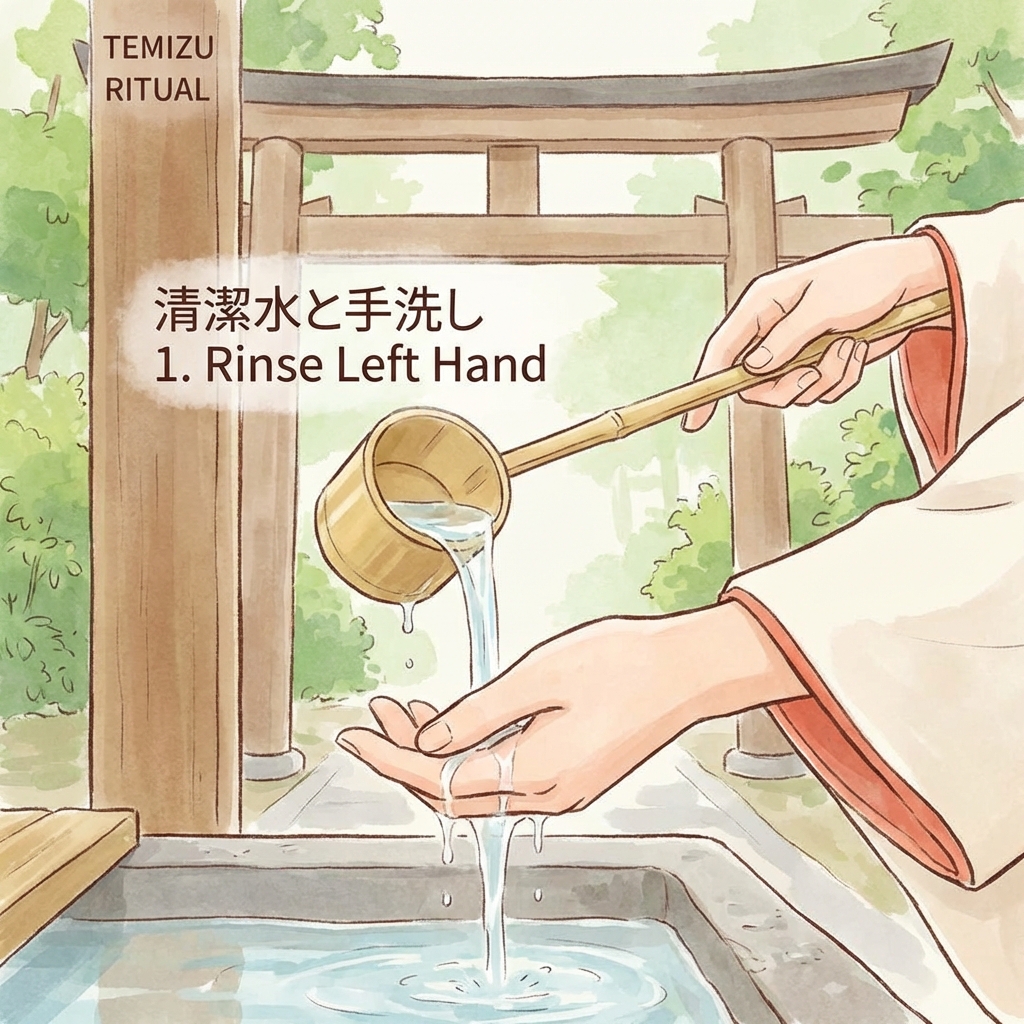
The temizu (手水) or chōzu basin is where you purify yourself before approaching the gods. This is one of the most important—and most confusing for tourists—parts of shrine etiquette.
Temizu Step-by-Step:
- Take the ladle with your right hand
- Scoop water and pour over your left hand
- Switch to your left hand and pour over your right hand
- Switch back to right hand, cup water in your left palm
- Rinse your mouth from your cupped hand (don't drink from ladle!)
- Pour remaining water over left hand again
- Tilt the ladle upright so water runs down the handle, cleaning it
- Return the ladle face down to the rack
💡 Tip: If there's no water or the temizu is closed (common since COVID), you can skip this step. The intent to purify is what matters.
Step 3: Making an Offering
At the main hall (拝殿, haiden), you'll find an offering box and often a bell.
- Offering amount: Any amount is fine. ¥5 coins are traditionally considered lucky (go-en = "five yen" sounds like "good fortune/connection")
- How to offer: Gently toss the coin into the box. Don't throw forcefully.
- The bell: If there's a bell with a rope, ring it 2-3 times gently to announce your presence to the kami
Step 4: The Proper Way to Pray
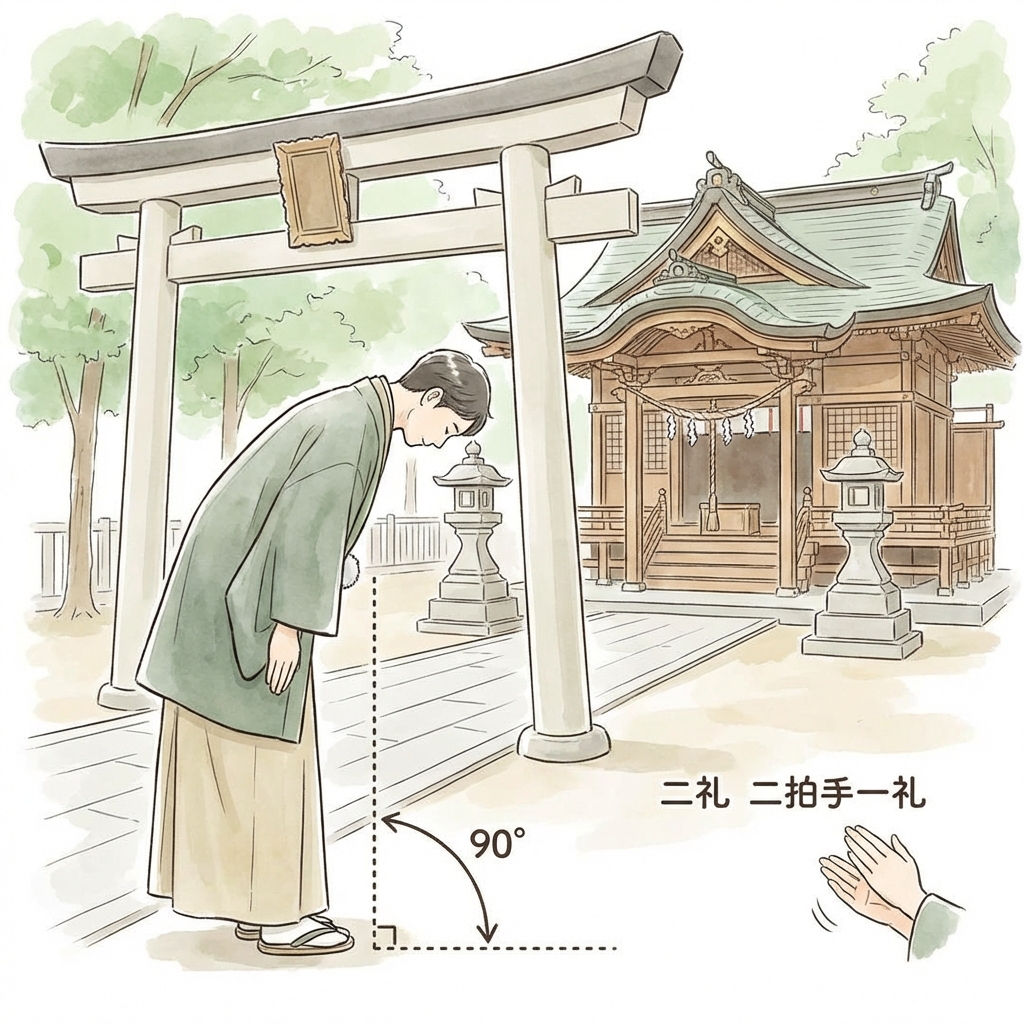
The standard Shinto prayer follows the "nihai-nihakushu-ichihai" pattern:
Bow twice (nihai 二礼)
Two deep bows (about 90 degrees) to show respect
Clap twice (nihakushu 二拍手)
Two sharp claps with hands at chest height to get the gods' attention
Pray silently
With hands together, express gratitude and make your wish
Bow once (ichihai 一礼)
One final deep bow to conclude
⚠️ Exception: At Izumo Taisha shrine, the custom is four claps instead of two!
Why do we clap? (Kashiwade)
The clapping in "Bow twice, Clap twice, Bow once" has profound meanings.
- Signaling the Kami: To announce "I am here."
- Purification: The sharp sound (Kashiwade) is believed to dispel evil spirits and purify the air.
- Harmony: Joining the right hand (body) and left hand (soul) symbolizes unity with the divine.
Step 5: Omikuji (Fortune Slips) Guide
Drawing an "Omikuji" is a way to receive a message from the gods.
Luck Ranking (Best to Worst)
- Dai-kichi (大吉): Great Blessing
- Kichi (吉): Blessing
- Chu-kichi (中吉): Middle Blessing
- Sho-kichi (小吉): Small Blessing
- Sue-kichi (末吉): Future Blessing
- Kyo (凶): Curse (Be careful)
- Dai-kyo (大凶): Great Curse (Don't worry, it can only get better!)
TIPS: The advice (poem or words) written on the slip is more important than the ranking. Take it as guidance for your current life.
- Keep it: Put it in your wallet as a charm and re-read it occasionally.
- Tie it: Tie it to the designated rack to "tie a connection" (En-musubi) with the kami. If it's bad luck, tie it to leave the bad luck behind.
- *Never tie it to a live tree as it can damage the tree.
Step 6: Writing Ema (Votive Tablets)
If you have a specific wish, write it on an Ema (wooden plaque).
How to write Ema
- Be Specific: Instead of "Happiness," write "Pass the university exam" or "Health for my family."
- Name and Date: Write your name (initials are fine) so the kami knows who it's from.
- Backside: Write on the blank side, not the side with the picture.
Step 7: Leaving (The Ritual Isn't Over)
The visit doesn't end when you finish praying.
- Bow at the Torii: When you exit the Torii gate, turn around to face the shrine and bow once more to say "Thank you."
- Naorai (Feasting): Eating or drinking something near the shrine is considered a part of the ritual (taking in the divine power). So enjoy some street food or tea on your way back!
Common Mistakes Tourists Make
- ❌ Walking in the center of the path: The center is reserved for kami
- ❌ Drinking from the ladle: Pour water into your cupped hand instead
- ❌ Taking photos during prayer: Wait until you've finished praying
- ❌ Confusing temple and shrine customs: Shrines have torii gates and clapping; temples have Buddha statues and silent prayer
- ❌ Leaving trash: Take all garbage with you
- ❌ Touching sacred objects: Don't touch shimenawa ropes, sacred trees, or shrine buildings
What to Wear
There's no strict dress code for tourists, but showing respect through clothing is appreciated:
- Avoid overly revealing clothing (short shorts, low-cut tops)
- Remove hats before the main hall
- Wear comfortable shoes (many paths are gravel)
- Special occasions (New Year, weddings) benefit from more formal attire
"Don't worry about being perfect. Shrines welcome visitors with sincere hearts, even if you make small mistakes. The intention to be respectful is what matters most."
FAQ: Shrine Etiquette Questions
Can I take photos at a shrine?
Yes, photography is generally allowed in the shrine grounds. However, never take photos directly of the main altar/deity where people are praying. Look for "No Photography" signs.
Is it rude to clap loudly?
No, the clap (kashiwade) is meant to be sharp and audible to attract the kami's attention. Don't be shy!
Do I need to be Shinto to pray?
Not at all. Shinto is very open and welcomes visitors of all faiths to pay respects. It's about gratitude and connection, not conversion.
Experience Shrine Culture Anywhere
Learn more about Japanese shrine traditions and even try digital omikuji before your visit.
Explore Shrines →After your prayer, you may receive a message or have the chance to draw an Omikuji (fortune slip) to guide your path forward.
Naminoue Shrine in Okinawa
Experience authentic Japanese shrine practice online. Perform virtual sanpai rituals and receive spiritual blessings.
Begin Your Shrine Experiencesacred shrine forests

February 16, 2026
Matsuri: The Ultimate Guide to Japan's Sacred Chaos
Japanese festivals are not just parties; they are sacred chaos. They are the one time of year when humans and gods drink, dance, and shout together. From carrying 1-ton portable shrines to eating Takoyaki, understand the deep spiritual structure of Matsuri.

February 15, 2026
Sensoji vs. Meiji Shrine: The Ultimate Tokyo Showdown
Tokyo's two spiritual giants offer completely different vibes. Sensoji (Asakusa) is the loud, colorful heart of Old Edo Buddhist culture. Meiji Shrine (Harajuku) is the serene, green soul of Modern Shinto. Which one should you visit? (Spoiler: Both, and here is exactly why).

February 13, 2026
Sacred Nature: Finding Kami in Trees and Rocks
Why do Japanese people bow to giant trees? What is the rope around that rock? Discover the roots of Shinto Animism, the concept of 'Shinboku' (Sacred Trees), and how nature itself is revered as divine.