
Complete Guide to Goshuin Collection: Shrine Proofs to Enjoy as Art
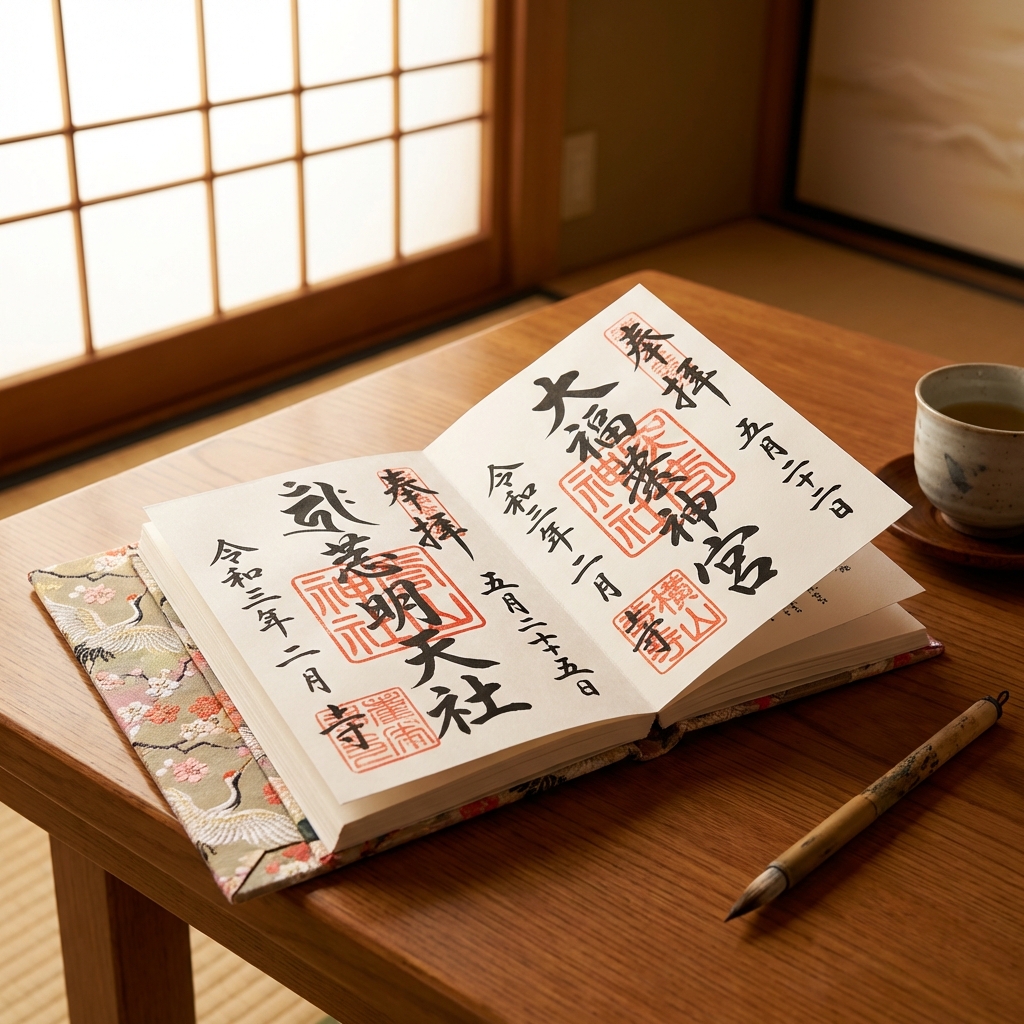
Recording Your Bond with the Kami
"Goshuin" is not just a stamp rally. It is a certificate proving that you visited the shrine and formed a connection (En) with the kami. The scent of ink, the powerful brushstrokes, and the vermilion seal. Each one is a unique piece of art and a "travel record" that brings back the atmosphere and prayers of that moment whenever you look at it.
Create your own "Digital Goshuin Book."
Manage visit records and photos in the cloud
Decoding the Goshuin
It often looks like artistic scribbles, but the structure is standard.
-
Top Right
"Houhai" (奉拝)
Means "Worshipfully bowed." Proof of your visit. -
Center (Ink)
Shrine or Kami Name
The name of the shrine or the deity enshrined there, written boldly. -
Center (Red Seal)
"Shinji" (Divine Seal)
The stamp of the kami. This is the main part of the Goshuin. -
Bottom Left
Date
The date of your visit. A record of your fateful day.
3 Golden Rules of Etiquette
Goshuin is sacred. Please observe these minimum manners.
1. Worship First
This is absolute. Goshuin is proof of worship. Going straight to the office without praying is like asking for a souvenir without saying hello to the host.
2. Bring a Goshuin-cho
Asking for it on a notebook or scrap paper is rude. Always bring a dedicated "Goshuin-cho" (book). If you forgot it, ask for "Kaki-oki" (separate paper).
3. Prepare Exact Change
The fee (Hatsuhoryo) is usually 300 to 500 yen. It's an offering to the kami, so having coins ready is smart etiquette.
Limited Editions are Booming
Recently, artistic Goshuin that change with seasons are trending.
- Kirie (Paper Cutting): Delicate, lace-like paper Goshuin.
- Monthly Designs: Featuring flowers or festivals of that month.
- Double Page: Dynamic drawings of dragons or landscapes across two pages.
TIPS: Popular limited editions can have long lines. Enjoy the atmosphere of the shrine grounds while you wait.
Choosing Your Book
Mainly two sizes: "Bunko" (Small/Paperback) and "Oban" (Large). Large is better for dynamic calligraphy, but Small is portable. Shrine-original books with embroidered deity messengers or flowers are great collectibles.
Memories that Last Forever.
Snap a photo of your Goshuin and save it digitally with location and date.
Complete your own power spot map
Read Next
Etiquette You Must Follow
There are minimum rules you should know to enjoy Goshuin collection. These are all based on "respect for Kami."
-
🙏
Worship First
Goshuin is "proof of worship." Do not go straight to the shrine office, but be sure to pray first.
-
📒
Prepare a Goshuin Book (Goshuin-cho)
It is rude to ask for it on a notebook or a scrap of paper. Be sure to prepare a dedicated "Goshuin-cho." KamiShrine is also developing a digital Goshuin-cho function.
-
🤫
Wait Quietly
While writing, the priest is concentrating mentally. Wait quietly without talking to them or peering in. That waiting time is also time to calm your mind.
-
💰
Prepare Small Change
The Hatsuhoryo (fee) is generally 300 to 500 yen. It is smart adult manners to prepare coins so that no change is needed.
Expanding as Art
In recent years, highly artistic Goshuin such as limited-time "Limited Goshuin," delicate ones using paper cutouts, and dynamic picture Goshuin using a two-page spread have increased.
However, no matter how colorful and rare the Goshuin, its essence remains the same. When you open that page later, the memory comes back: "The air at that shrine was refreshing that day." The Goshuin book is an album (log) of your spiritual journey.
Make Your Worship Record More Beautiful.
KamiShrine is planning to issue "Digital Goshuin" as proof of online worship.
Using blockchain technology, you will be able to leave your one-of-a-kind proof of worship forever.
Coming Soon...
After your prayer, you may receive a message or have the chance to draw an Omikuji (fortune slip) to guide your path forward.
Naminoue Shrine in Okinawa
Experience authentic Japanese shrine practice online. Perform virtual sanpai rituals and receive spiritual blessings.
Begin Your Shrine Experiencesacred shrine forests

February 16, 2026
Matsuri: The Ultimate Guide to Japan's Sacred Chaos
Japanese festivals are not just parties; they are sacred chaos. They are the one time of year when humans and gods drink, dance, and shout together. From carrying 1-ton portable shrines to eating Takoyaki, understand the deep spiritual structure of Matsuri.

February 15, 2026
Sensoji vs. Meiji Shrine: The Ultimate Tokyo Showdown
Tokyo's two spiritual giants offer completely different vibes. Sensoji (Asakusa) is the loud, colorful heart of Old Edo Buddhist culture. Meiji Shrine (Harajuku) is the serene, green soul of Modern Shinto. Which one should you visit? (Spoiler: Both, and here is exactly why).

February 13, 2026
Sacred Nature: Finding Kami in Trees and Rocks
Why do Japanese people bow to giant trees? What is the rope around that rock? Discover the roots of Shinto Animism, the concept of 'Shinboku' (Sacred Trees), and how nature itself is revered as divine.